Connect this guide with the rest of your visit in the Helsinki trip planner. Read how the research is made and what its sources establish.
At a glance
Start here
- Choose Suomenlinna for layered fortification history and the most dependable year-round public connection.
- Choose Pihlajasaari for a seasonal recreation day across two linked islands.
- Choose Harakka for Baltic nature interpretation and a marked-route visit.
- Check the boat operator, return service, and protected-area rules for the exact date.
01
Choose the island before choosing the boat
Start with the experience you want. Suomenlinna supports a long historical visit through fortifications, museums, resident streets, and a marked main route. Pihlajasaari combines former villa landscapes with sandy roads, rocky and sandy shores, and a nature trail across two islands joined by a footbridge. Harakka concentrates protected archipelago nature, bird observation, and environmental interpretation in a smaller circuit.
The boat is the second decision because transport systems differ. The HSL ferry to Suomenlinna operates throughout the year and uses an HSL ticket. Pihlajasaari and Harakka depend on seasonal water transport whose operator terms and dates must be checked. A beautiful weather forecast does not replace confirmation of the last useful return or the island rules.
- History and built heritage point toward Suomenlinna.
- A recreation landscape points toward Pihlajasaari.
- Nature interpretation and protected habitats point toward Harakka.
02
Give Suomenlinna enough time for its scale
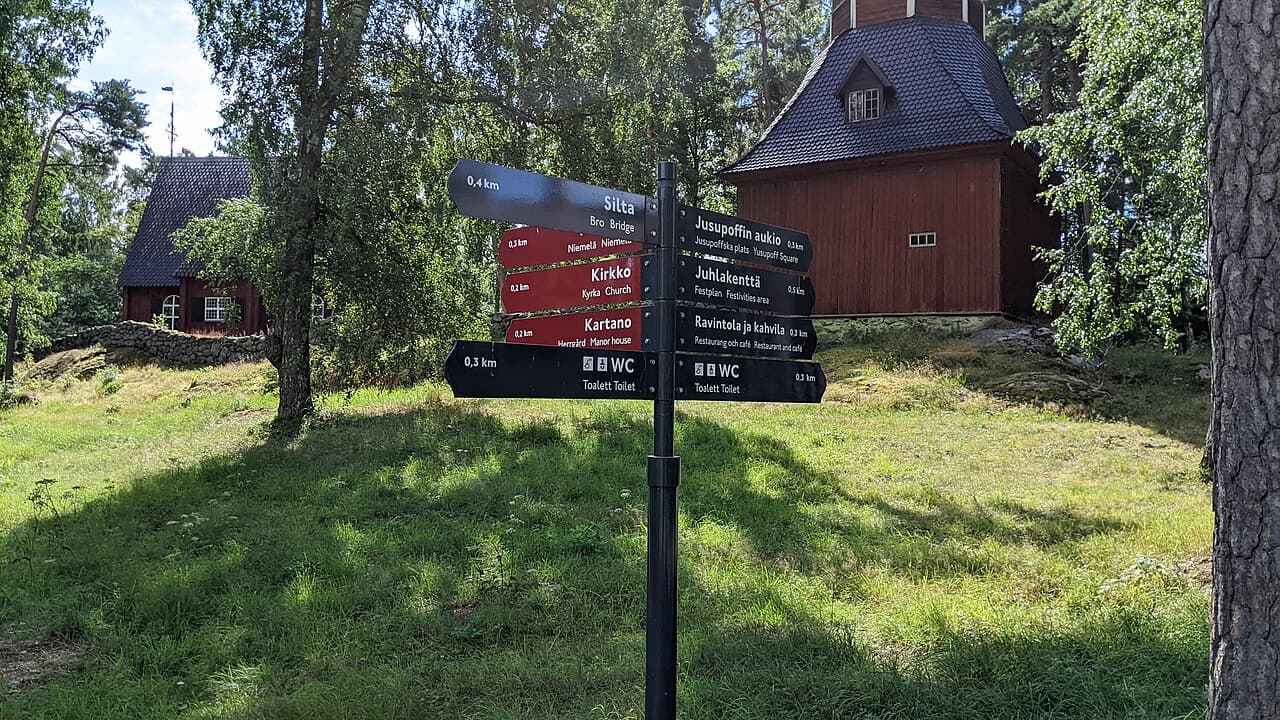
Suomenlinna is reached by HSL ferry from Market Square throughout the year. The fortress itself has no general entrance fee, although transport and individual museums or activities have their own arrangements. Its official visitor guidance recommends the Blue Route as the main line through the site. The route is about 1.5 kilometres one way and connects the principal historical areas without pretending the islands are an open-air theme park.
Remember that Suomenlinna is also a residential district. A sensible visit follows the marked route, enters only spaces presented for visitors, and leaves private yards alone. The Blue Route gives a coherent spine; side visits can be added after checking current museum and tunnel information. If the weather or mobility of the group argues for less, choose a shorter out-and-back rather than forcing the entire line.
- Use the HSL ferry page for the live crossing plan.
- Treat the Blue Route as a spine, not a requirement to see everything.
- Separate general access to the fortress area from individual venue arrangements.
03
Let conservation rules shape the Suomenlinna visit
Suomenlinna’s care guidance explains that the marked Blue Route helps protect fortifications, vegetation, and resident privacy. Historic earthworks can include steep or unfenced edges, and some passages are uneven or dim. The right response is not a blanket claim about access or safety; it is to check the route information for your group and remain on the intended visitor line.
The fortress prohibits open fires and camping, and asks visitors not to climb structures or disturb the site. These rules are integral to the experience because the landscape is both cultural heritage and living environment. Carry out what you bring, use designated facilities, and adjust the plan rather than improvising through closed ground. Current notices should overrule any route described in an older guide.
- Stay with marked visitor routes and respect closed areas.
- Do not enter private yards or use fortifications as climbing structures.
- Read current conditions before adding tunnels or shoreline detours.
04
Choose Pihlajasaari for an unhurried recreation day
Pihlajasaari lies off southern Helsinki and is served by seasonal water transport from city departure points identified on the municipal page. The former villa island now offers sand roads, rocky and sandy shoreline environments, and a nature trail. A footbridge joins its two principal islands, making the visit feel more varied than a single compact loop.
Its appeal depends on leaving room rather than stacking attractions. Walk the linked landscape, choose a place to pause, and check which services are operating on your date. The city lists seasonal facilities, but those should not be assumed outside their published period. Pihlajasaari is the strongest choice of the three when the purpose is simply to spend time in an archipelago recreation setting rather than follow a dense historical narrative.
- Confirm the seasonal boat’s departure point and return before leaving shore.
- Use the footbridge to compare the two island characters.
- Carry a plan that does not depend on every seasonal service being open.
05
Choose Harakka for close nature interpretation
Harakka is reached by a short seasonal boat connection from the Ullanlinna shore. The city’s island page describes roughly a one-kilometre route over mixed terrain and notes that the ferry itself is not accessible. About half the island is protected through four nature reserves, and seasonal nesting closures can alter where visitors may go. Dogs are not permitted on the island.
The Nature Centre interprets the Baltic Sea and archipelago through exhibitions and outdoor observation points. Its page also makes an important planning distinction: there is no café, so visitors should not build a food stop into the visit without checking separate current options. Harakka suits travelers willing to follow marked trails, accept seasonal limits, and make the protected landscape the main event.
- Check the seasonal boat and its stated access limitations.
- Remain on marked routes and obey nesting-area closures.
- Bring a visit plan that does not rely on an island café.
06
Compare logistics without flattening the islands
Suomenlinna has the clearest year-round public-transport framework: an HSL ferry from Market Square using HSL ticketing. Pihlajasaari and Harakka are seasonal choices, so their usefulness depends more heavily on the exact operating calendar. Even when two boats leave the southern waterfront, their tickets, docks, and return conditions should be treated separately.
Services on land differ just as much. Suomenlinna has multiple independent visitor venues within a resident district. Pihlajasaari lists recreation facilities that vary by season. Harakka centres on nature education and explicitly lacks a café. Check only the facilities you genuinely need, such as a toilet, food option, or indoor stop, on the official island page before departure.
- Verify the operator name as well as the island name.
- Save the final suitable return, then recheck it at the dock.
- Do not transfer service assumptions from one island to another.
07
Build one coherent island day
For Suomenlinna, begin with the Blue Route and choose only a few side venues after reading their current pages. For Pihlajasaari, make the linked islands and nature trail the structure, with long pauses rather than a timetable of sights. For Harakka, let the marked circuit and Nature Centre determine the pace, accepting any protected-area closure as part of responsible use.
Avoid trying to combine two islands merely because both appear near Helsinki on a map. Separate boat systems and return times create unnecessary fragility, while each destination has enough identity for a focused visit. If uncertain, Suomenlinna is the year-round historical choice; wait for verified seasonal service when Pihlajasaari’s recreation landscape or Harakka’s nature focus is the real goal.
- Select one island as the day’s anchor.
- Check transport, essential facilities, and restrictions in that order.
- Keep the return flexible around the operator’s live service.
Useful answers
Reader questions
Which Helsinki island is easiest to visit year-round?
Suomenlinna has the strongest year-round framework because HSL operates its public ferry from Market Square throughout the year. Pihlajasaari and Harakka rely on seasonal boat services that must be checked for the visit date.
Sources: Governing Body of Suomenlinna; City of Helsinki; City of HelsinkiDoes Suomenlinna use one ticket for the whole fortress?
No single ticket covers every part of the visit. Travelers arrange the boat journey first, then check individual museums or activities separately. HSL and seasonal waterbus tickets are also different products.
Sources: Governing Body of SuomenlinnaWhich island is best for nature observation?
Harakka has the most explicit nature-education focus, with protected areas, a marked circuit, and Nature Centre interpretation of the Baltic Sea and archipelago. Visitors must follow current nesting closures and island rules.
Sources: City of Helsinki; City of HelsinkiCan I rely on buying food on every island?
No. Island services vary by destination and season, and Harakka’s Nature Centre specifically states that it has no café. Check the official page for the exact date and carry a plan that works without an assumed food outlet.
Sources: City of Helsinki; City of HelsinkiRead the evidence
Sources and further reading
These sources support the relevant sections above. Plans and comparisons are editorial suggestions. Check operators for current arrangements.
- Arriving at Suomenlinna ↗Governing Body of Suomenlinna · Research date 14 September 2026
Ferry and waterbus distinctions, ticket requirements, year-round arrival, and separate arrangements for individual venues.
- Frequently asked questions ↗Governing Body of Suomenlinna · Research date 14 September 2026
Blue Route length, resident-district context, tunnel caveats, storage, camping, and fire restrictions.
- Enjoy with care ↗Governing Body of Suomenlinna · Research date 14 September 2026
Conservation purpose of the Blue Route, resident privacy, terrain cautions, and prohibited activities.
- Pihlajasaari ↗City of Helsinki · Research date 14 September 2026
Seasonal water transport, former villa setting, paths, shores, footbridge, trail, and seasonal services.
- Harakka Island ↗City of Helsinki · Research date 14 September 2026
Seasonal crossing, route terrain, ferry limitation, reserves, nesting closures, marked paths, and dog prohibition.
- Harakka Nature Centre ↗City of Helsinki · Research date 14 September 2026
Nature Centre themes, observation facilities, seasonal programme, closures, and absence of a café.